Seeing School Through Your Child’s Eyes
How Emotional Calm Builds Confidence, Focus, and Resilience
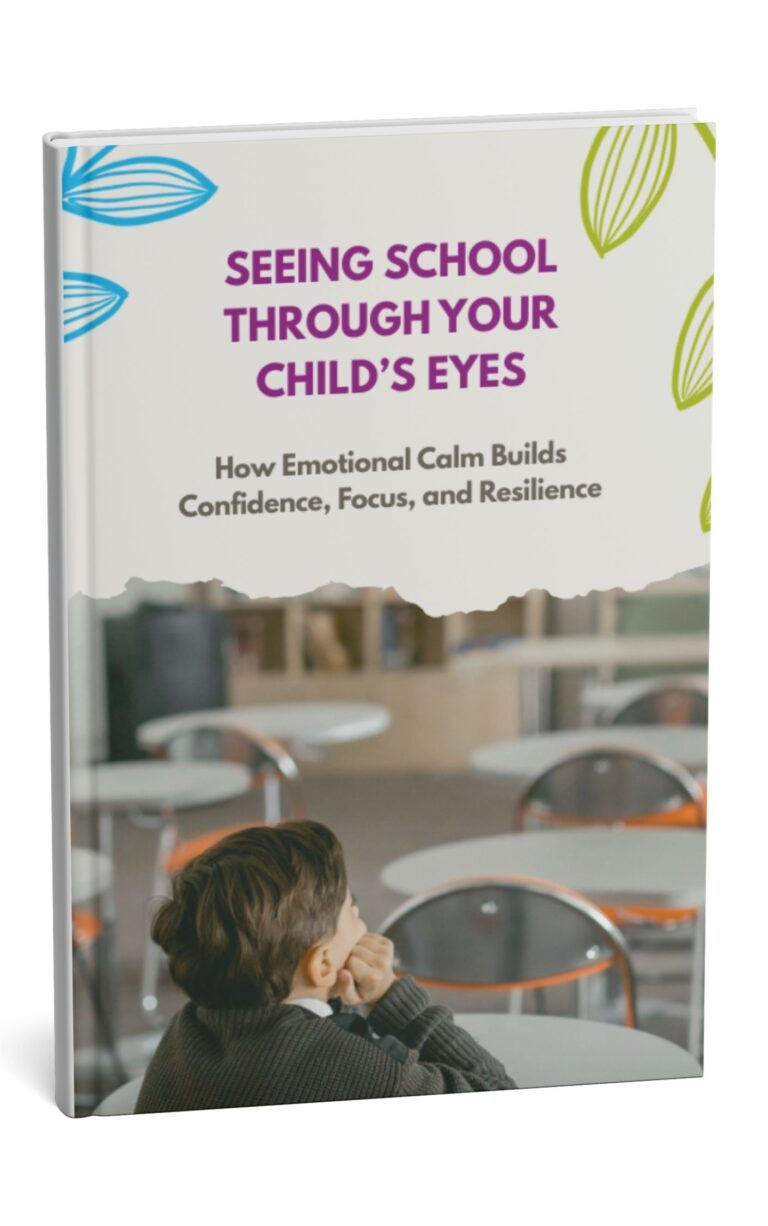
A practical, science-based guide to raising calm, confident, and emotionally strong children without yelling, guilt, or constant power struggles.
Complete 11-Chapter Parenting Guide
✔ Practical strategies
✔ Clear step-by-step structure
✔ Designed for real families
Only $9
Small Shifts Today. Stronger Children Tomorrow.
Inside, you’ll discover practical ways to reduce daily tension, strengthen emotional resilience, and build the kind of confidence that lasts far beyond school years. These are not complicated theories, but simple foundations that help children feel safe, capable, and understood.
When emotional safety becomes the starting point, everything else begins to change—learning becomes easier, communication becomes calmer, and your child starts developing the inner strength they will carry for life.
You’re just one step away from building a calmer home and a stronger future for your child.
Why This Matters Now
- The school years move quickly.
- Emotional patterns form early.
- Confidence either strengthens — or slowly weakens.
- The earlier you build emotional safety, the stronger the long-term results.
Why This Works When Other Parenting Advice Hasn’t
Most parenting advice focuses on controlling behavior.
Sticker charts. Consequences. Time-outs. Rewards. Punishments.
Sometimes they work, but only for a while.
If you’ve noticed that the same struggles keep coming back, it’s not because you’re failing.
It’s because behavior is a surface symptom.
Underneath every meltdown, refusal, or shutdown is an overwhelmed nervous system.
This guide works differently.
Instead of asking,
“How do I stop this behavior?”
It teaches you to ask,
“What is this behavior communicating?”
When you respond to emotional needs rather than just correcting actions:
• Power struggles decrease
• Cooperation increases naturally
• Emotional outbursts shorten
• Confidence strengthens
• Trust deepens
This approach doesn’t fight the child.
It supports the child.
And when children feel supported, they stop fighting.
Based on well-established principles of:
• Emotional regulation development
• Attachment theory
• Social and emotional learning
• Growth mindset psychology
Simple. Practical. Realistic.
You do not need hours of preparation.
You do not need complex systems.
You do not need perfection.
Small, consistent shifts create powerful results.
Traditional Parenting vs Foundation-Based Parenting
Traditional Parenting
Foundation-Based parenting
| Focus on correcting behavior |
| React to problems |
| Emphasize performance |
| Control outcomes |
| Focus on emotional foundations |
| Build regulation skills |
| Strengthen confidence |
| Support long-term growth |
Your 11-Step Path to Raising Calm and Confident Children
Part 1 – Building Emotional Foundations
(Chapters 1–4)
• Creating emotional safety at home
• Understanding behavior beneath the surface
• Strengthening regulation skills
• Establishing predictable routines
Part 2 – Developing Confidence & Resilience
(Chapters 5–8)
• Building authentic confidence
• Responding to mistakes constructively
• Supporting autonomy
• Reducing performance pressure
Part 3 – Supporting Focus & School Success
(Chapters 9–11)
• Improving attention naturally
• Navigating homework without conflict
• Strengthening social & emotional skills
What Happens When You Start Applying These Principles
The change does not happen overnight.
It unfolds gradually, in small but meaningful ways.
Here’s what many parents begin to notice:
Week 1:
You respond more calmly.
Mornings feel slightly less chaotic.
You pause before reacting.
Week 2–3:
Your child argues less intensely.
Homework becomes more manageable.
Emotional outbursts settle more quickly.
Month 1:
Your child begins expressing feelings more clearly.
You notice small signs of confidence growing.
There is less tension in the home.
Month 2 and beyond:
Your child handles frustration better.
Mistakes feel less overwhelming.
Resilience begins to appear naturally.
This is not magic.
It is what happens when emotional safety becomes consistent.
You may start noticing:
• Fewer emotional escalations
• More cooperation during routines
• Greater confidence when facing challenges
• A calmer atmosphere at home
The Long-Term Impact
Imagine your child at 16.
Facing pressure.
Facing failure.
Facing comparison.
Now imagine they know:
“My emotions are safe.”
“I can recover.”
“I am capable.”
That foundation does not begin in adolescence.
It begins now.
The small moments you create today shape the strength they carry tomorrow.
Curious? Let's Address Your Questions:
Is this guide suitable for all ages?
The strategies are designed mainly for parents of school-age children but many principles apply more broadly.
Do I need special training to apply the ideas?
No. The guide focuses on practical and simple approaches.
How long does it take to see changes?
Small improvements can often appear quickly when emotional safety becomes the focus.